
You don’t teach a class. You teach a student.
—Paul Baker
What We Carry Forward
Rooted in Paul Baker’s Integration of Abilities, this curriculum carries forward a way of teaching that engages the whole student — the senses, the body, the imagination, the intellect, and the individual creative voice.
This work connects creative expression, sensory awareness, movement, story, reflection, and discovery as serious tools for learning. It is not creativity as decoration. It is creativity as a way of thinking, questioning, observing, and understanding.
Through curriculum, educator resources, and classroom experiences, these materials help teachers bring this approach into today’s learning environments.
Why This MattersStudents need more than information
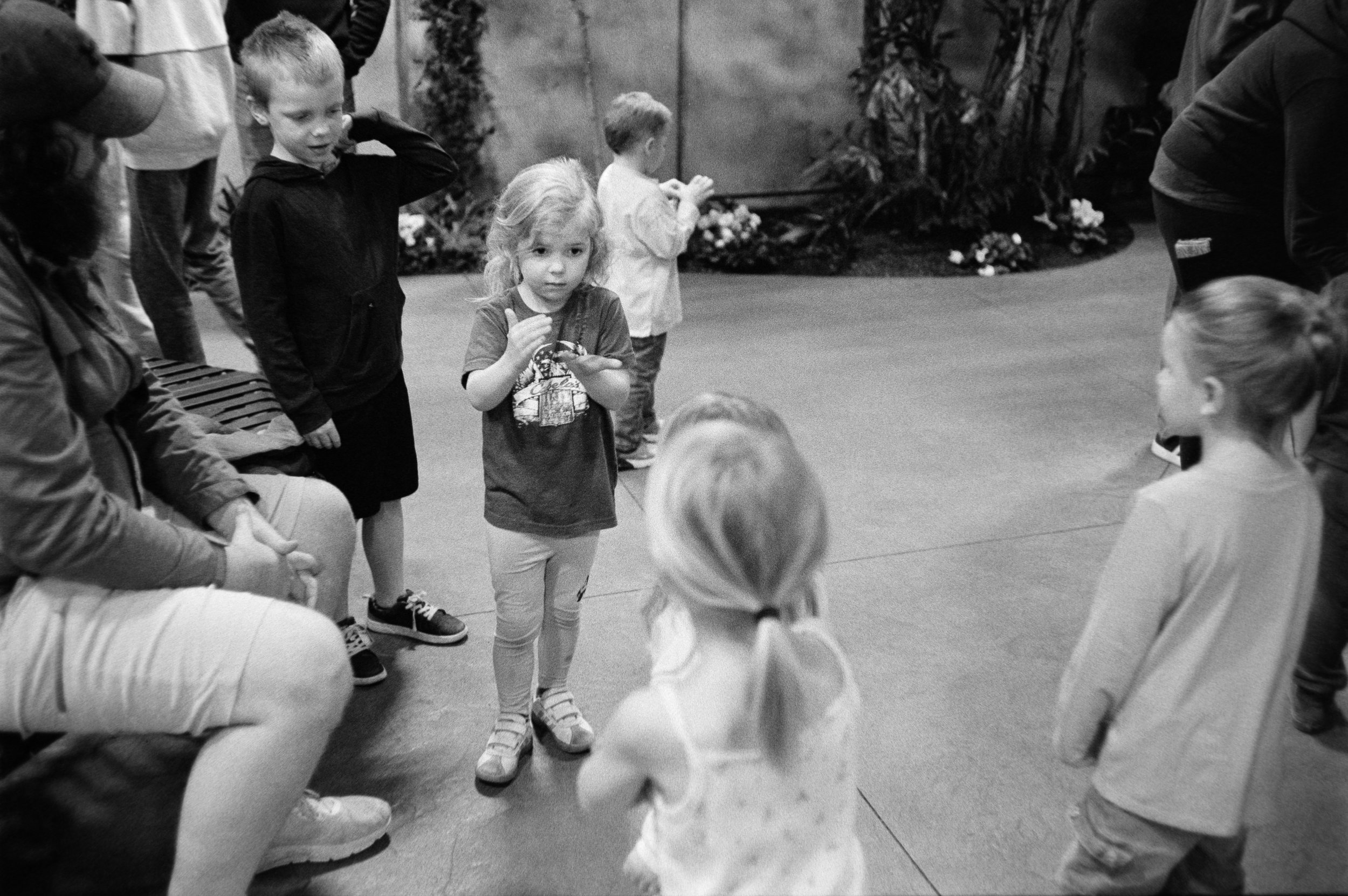
They need ways to observe, question, imagine, collaborate, communicate, and make meaning from the world around them.
Paul Baker believed education should awaken the whole student — the senses, the body, the imagination, the intellect, and the individual creative voice.
Curriculum Overview
A practical path into creative and sensory learning
The Baker Sensory Curriculum is organized to help educators guide elementary students through creative learning experiences using story, sensory exploration, movement, reflection, and expression.
The curriculum is divided into two learning levels:
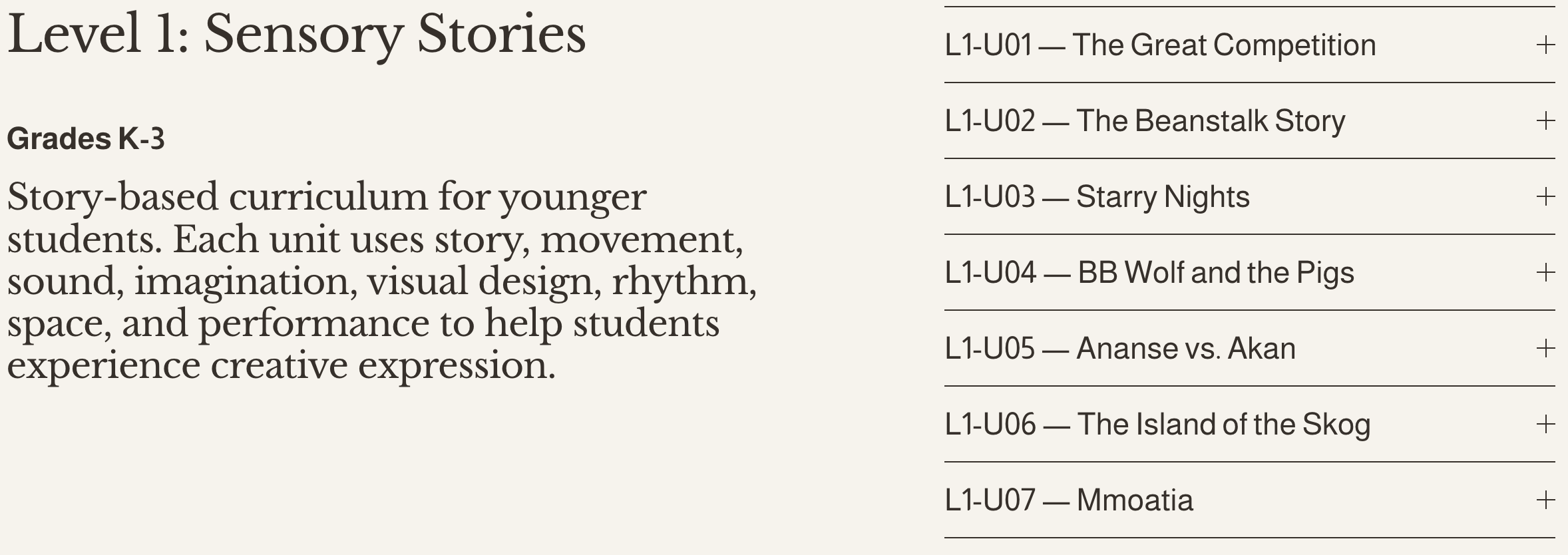
Level 1: Story-Based Learning for Grades K-3
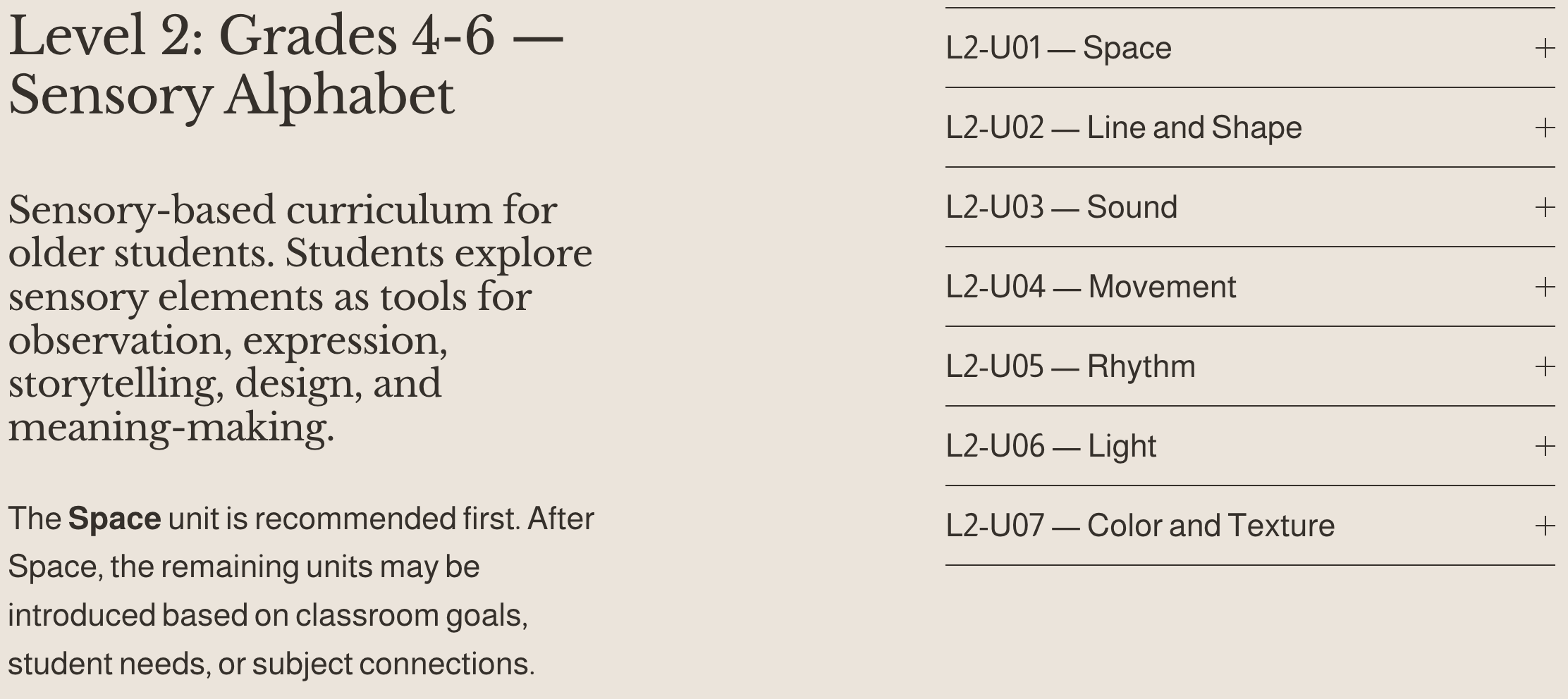
Level 2: Sensory-Based Learning for Grades 4–6
Each level includes teacher-facing Unit Guides, student-facing Classroom Slide Decks, and related supporting materials. The Unit Guides provide lesson structure, goals, classroom flow, discussion prompts, activities, and reflection opportunities. The Classroom Slide Decks help introduce sensory concepts, guide activities, and provide visual structure for students during instruction.
Educators are encouraged to review the Educator’s Guide first for an orientation to the Baker approach, lesson structure, standards alignment, and practical guidance for using the curriculum.
Curriculum Levels
The curriculum is designed to support elementary learners while giving educators enough structure to guide a class and enough flexibility to adapt the experience for their own students.
Level 1: Story-Based Learning
Recommended for Grades K–3
The younger curriculum introduces sensory learning through story. Students enter a creative world through narrative, character, movement, sound, image, and imagination.
Rather than beginning with abstract concepts, students are invited into sensory discovery through stories that help them explore questions such as:
What does this place feel like?
How does this character move?
What sounds belong in this world?
What colors, textures, or shapes tell the story?
How can my body, voice, and imagination help me understand?
This level provides younger learners with a softer, more accessible path into the Baker approach.
Level 2: Sensory-Based Learning
Recommended for Grades 4–6
The older curriculum introduces students more directly to the sensory elements themselves. The Sensory Alphabet is the building block of creative expression. Students explore each element as tools for observation, communication, design, performance, and storytelling.
The nine sensory elements are organized into seven categories to facilitate teaching and creative expression.
Space
Line & Shape
Sound
Movement
Rhythm
Light
Color & Texture
Level 1 Preview
Level 2 Preview
Accessing the Curriculum
The Baker Sensory Curriculum includes unit guides, classroom slide decks, and related educator materials designed to help bring creative and sensory learning into the classroom.
Educators, schools, and partner organizations may use the contact form to request curriculum access, ask questions, or learn more about using these materials.